Understanding Color Temperature: Why It Matters for Your Flashtech Lighting Choices
Understanding Color Temperature: The Key to Perfect Lighting with Flashtech
The idea of color having a temperature might sound like something out of a science fiction novel, but it’s a simple concept with practical applications in everyday life. Color temperature measures the visual hue of a light source, not its actual heat. Warm colors like those seen in sunsets or campfires have lower temperatures, while cooler hues like daylight or HID lights have higher temperatures.
Let’s break this down and explore why understanding color temperature matters, particularly when choosing the perfect lighting solutions for your home, vehicle, or outdoor spaces.
What is Color Temperature?
Without diving too deeply into the science, color temperature is measured in Kelvin (K). This measurement originates from the concept of a “blackbody,” a theoretical object in physics that absorbs all radiant energy and appears black. When heated, a blackbody changes color, progressing from black to red, orange, blue, and white as the temperature increases. These changes in hue correspond to specific Kelvin values, forming the basis of the color temperature scale.
- A warm, golden glow like a sunset is below 3,000K.
- Natural daylight and optimal lighting for visibility fall between 5,500K and 6,500K.
- Cool, bluish light, often associated with certain HID lights, exceeds 6,500K.
Why Does Color Temperature Matter?
In the past, color temperature wasn’t much of a concern due to the limited capabilities of halogen bulbs, which typically hovered around 3,200K. While this created a warm and romantic ambiance, it wasn’t ideal for clear visibility while driving or performing tasks.
LED lighting changed the game by offering the flexibility to produce a wide range of color temperatures. Now, selecting the right hue of light is crucial for achieving the desired functionality and aesthetic.
In Homes:
- Warm light (3,000K) creates a cozy, inviting atmosphere, perfect for living rooms and bedrooms.
- Cool light (5,500K–6,500K) is ideal for kitchens, bathrooms, and workspaces where clarity and focus are important.
In Automotive Applications:
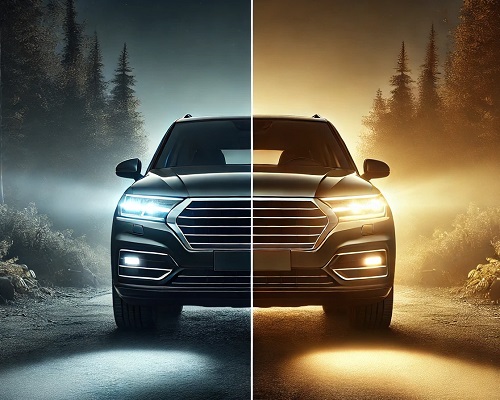
- For headlights, the optimal range is 5,500K to 6,500K, matching the peak performance range of human vision during daylight.
- For fog lights, yellow LEDs with a color temperature of around 3,000K reduce glare and improve visibility in fog, snow, or dust.
What is the Best Color Temperature?
The best color temperature depends on the application:
- Day-to-Day Driving: For clear nighttime driving, aim for LED headlights in the 5,500K–6,500K range. This mimics daylight and maximizes visibility.
- Inclement Weather: Yellow fog lights (3,000K) excel in adverse conditions by reducing glare and enhancing depth perception in fog or snow.
The Lumens Factor
It’s important to note that color temperature and brightness (measured in lumens) are mostly independent. For example, yellow LED fog lights might share a similar color temperature to halogen lights, but they’re significantly brighter. On average, LEDs produce four times the lumens of halogens, making them a superior choice regardless of color temperature.
Why Choose Flashtech Lighting?
Flashtech Lighting offers a diverse range of innovative lighting solutions tailored to your needs. Whether you’re upgrading your vehicle’s headlights, enhancing your home’s ambiance, or tackling the toughest weather conditions with reliable fog lights, Flashtech products provide:
- Precision-engineered color temperatures.
- Superior brightness and performance.
- Durable, energy-efficient designs.
Illuminate Your World with Flashtech
Understanding color temperature isn’t rocket science, but it’s a game-changer when choosing the right lighting for your needs. Explore Flashtech’s cutting-edge LED solutions to experience the perfect balance of aesthetics and functionality. You can view HID products, where color temperatures range from 5000K to 10000K. Additionally, explore LED bulbs, which come in many different colors, but most white bulbs are 6000K. Illuminate your path with clarity and style—whether at home, on the road, or in the great outdoors.