Understanding Moisture in Headlights: Causes, Effects, and Solutions
Understanding Moisture in Headlights: Causes, Effects, and Solutions
Have you recently upgraded to new headlights only to notice fogging or moisture inside? It's a common concern among customers who expect superior performance from their lighting systems. While it may be alarming at first sight, understanding the nature of this moisture can help alleviate your worries.
The Difference Between Condensation and Water Ingress
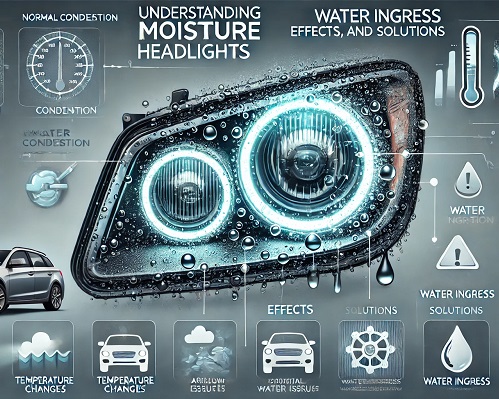
Moisture in headlights typically falls into two categories: condensation and water ingress. Recognizing the difference between these two conditions is crucial for determining whether any action is necessary.
Condensation
Condensation occurs when water vapor transforms back into liquid form, often appearing as misting or small droplets within the headlight. This phenomenon is entirely normal and does not indicate a defect in your lights.
- Misting or fogging appears as small droplets of moisture.
- This condition will naturally evaporate over time.
- No damage will occur due to condensation.
- This situation should not be considered a defect requiring repair or replacement.
Water Ingress
On the other hand, water ingress signifies that significant amounts of water have leaked into the light housing—potentially causing damage. This might manifest as larger droplets or pooling water inside the light fixture:
- You may observe large drops of moisture accumulating inside.
- This condition will not evaporate on its own; intervention may be needed.
- If left unaddressed, it could lead to potential damage to your headlights.
- This indicates either physical damage or a manufacturing defect that requires attention.
What Causes Condensation in Headlights?
The primary cause of condensation lies in temperature differences. Most headlights generate heat during operation while also requiring ventilation for optimal performance. Vents allow some humidity from outside air to enter but can lead to minor condensation within the unit when warm air meets cooler surfaces inside the lens.
This process resembles everyday occurrences like dew forming on grass early in the morning after a cool night. The same principle applies here—when warm, moist air encounters cooler surfaces (like your headlight lenses), it condenses and forms tiny droplets.
Additionally, materials used within lamps can absorb some moisture, which further contributes to this effect when temperatures fluctuate dramatically between day and night—or with changing weather conditions throughout seasons!
Will Condensation Damage Your Lights?
No evidence suggests that typical condensation negatively impacts functionality or longevity! Furthermore, many components are treated with insulator sprays designed specifically for protecting lamp materials against rusting caused by exposure over time.
So rest assured; there’s no need for alarm regarding standard levels of internal moisture accumulation!
How To Fix Condensation in Headlights
If you're experiencing mild cases of condensation buildup inside your headlights, don’t panic! Oftentimes, they resolve themselves without intervention—but if you'd like faster results, consider trying these methods:
- Avoid exposing lights directly to cold environments until balanced temperatures return (this includes washing/rain). Wait at least 24 hours after seeing signs before cleaning again!
- Remove bulbs and dust caps, then park under direct sunlight so warmth encourages quicker evaporation!
- If needed, apply gentle heat using a hairdryer or heat gun, keeping distance away from the surface—it helps regulate temperature efficiently too!
Note: If you suspect any signs indicating possible leaks or water ingress, contact our support team immediately—we're happy to assist in resolving issues quickly!